Platform · Assessment & Evaluation
Every Assessment Model. One Evaluation Platform.
From online CBT and institute-level examinations to test series, paper-based workflows and digital on-screen marking, Next Learner supports the complete assessment and evaluation lifecycle.
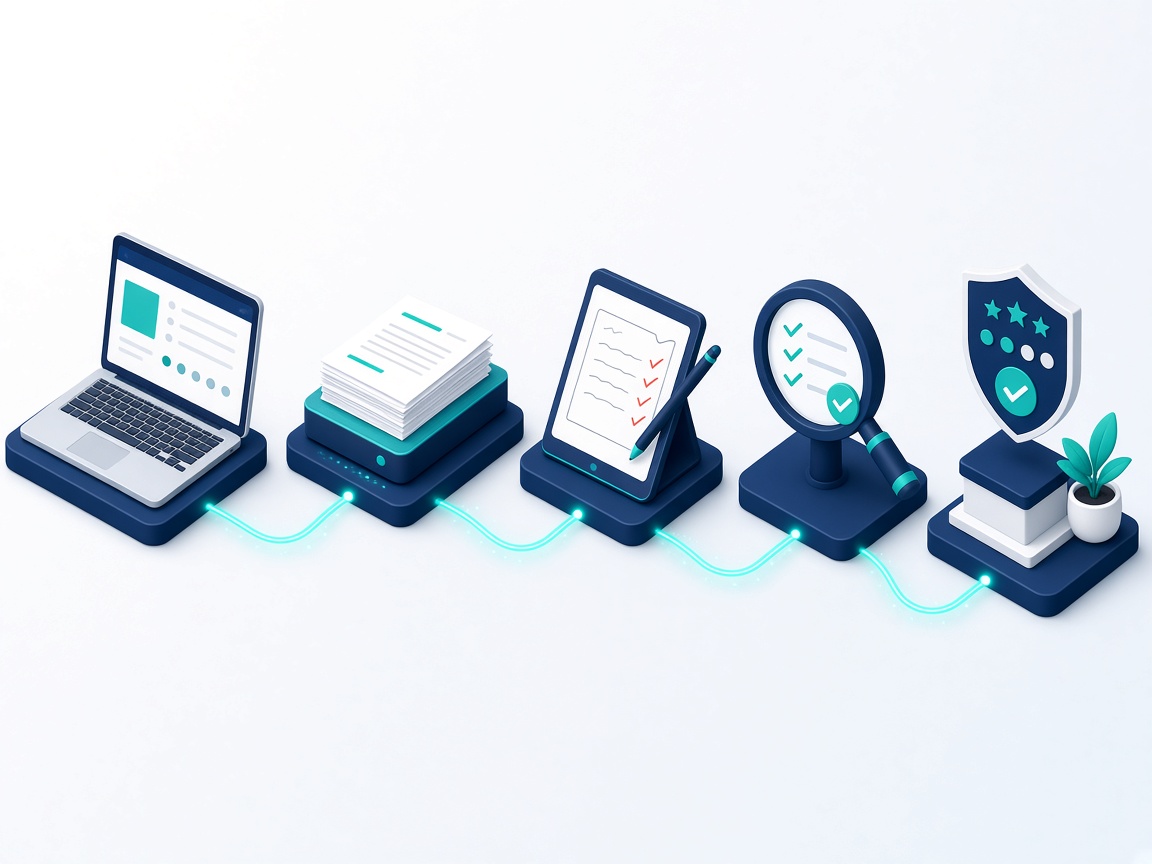
Four ways to assess—one connected platform
Choose the model that fits the examination. They share the same learner records, question content and results.
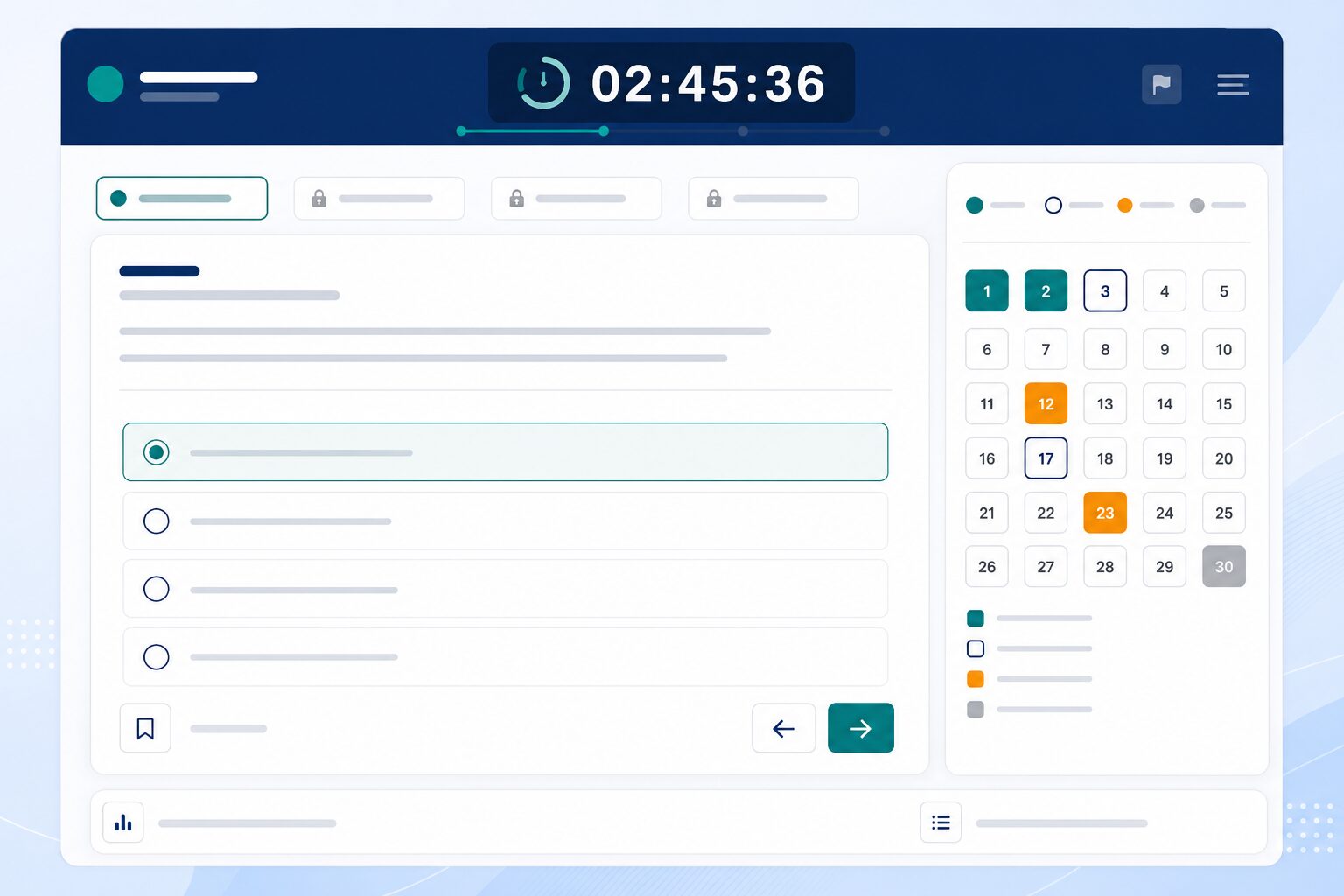
Online Assessment
Learners attempt tests on screen; objective questions are evaluated automatically and results are available immediately.
What it covers
- CBT
- Mock tests
- Test series
- Practice assessments
- Timed examinations
- Auto evaluation
- Best for
- Coaching, test prep & continuous practice
- Evaluated by
- The platform (objective items)
- Output
- Scorecards, ranks & analytics
Typical flow
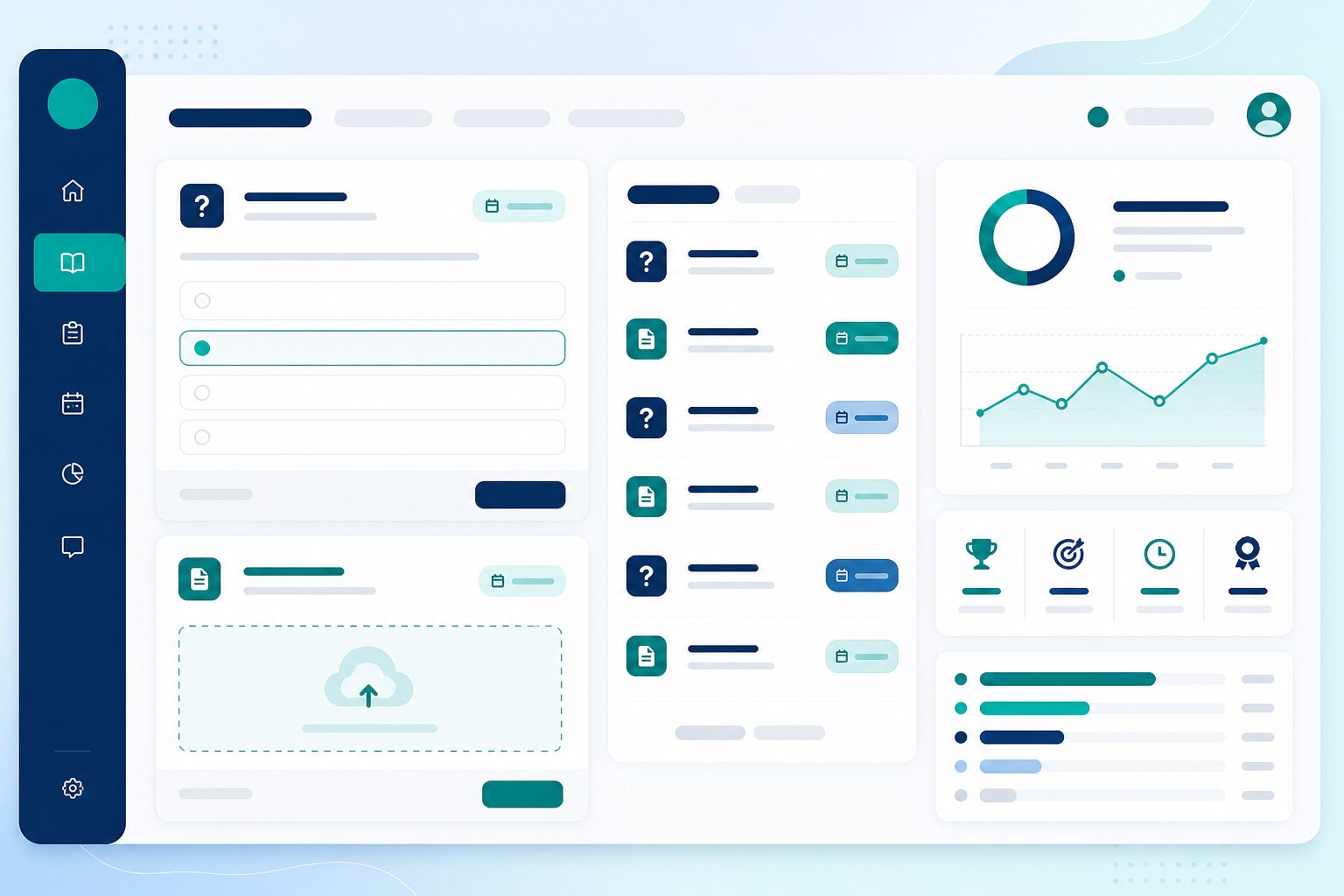
Institute Examinations
Run examinations inside academic programmes—linked to courses, cohorts and learner records.
What it covers
- Internal examinations
- Semester examinations
- School examinations
- Competitive examinations
- Certification assessments
- Best for
- Schools, colleges & certification programmes
- Delivered
- Online, on paper, or both
- Output
- Published results & reports
Typical flow
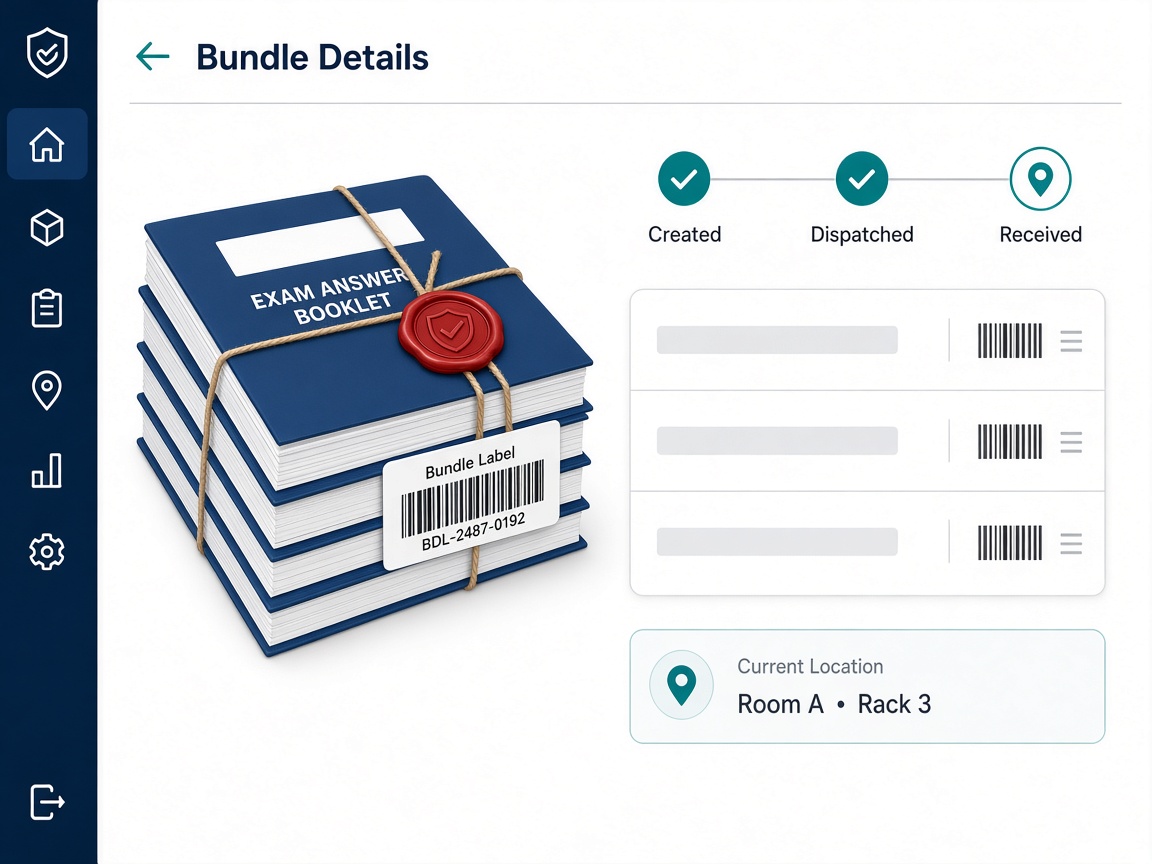
Paper-Based Assessment
Keep the physical examination—and digitise everything after it. Print, dispatch, collect, scan and validate before upload.
What it covers
- Physical answer books
- OMR sheet printing & dispatch
- Scanning operations
- Digital answer-book processing
- Scan-to-result workflows
- Best for
- Boards, universities & assessors
- Operations
- Print, scan & reconcile
- Output
- Files ready for OSM upload
Typical flow
Next Scanning validates and reconciles before upload. QC and marking happen inside Next OSM.
Digital Evaluation
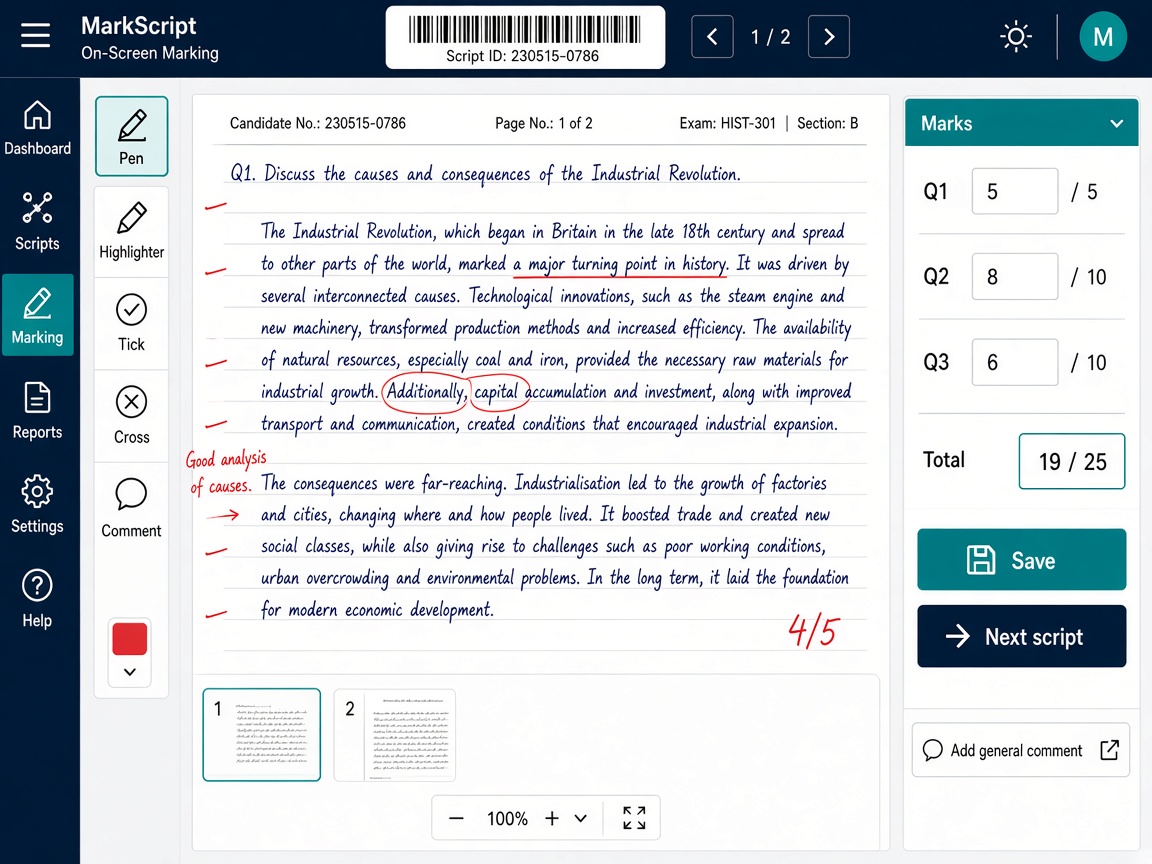
Evaluators mark scanned answer books on screen under controlled allocation, quality checks and moderation.
What it covers
- On-screen marking
- Evaluator allocation
- QC
- Review
- Moderation
- Finalization
- Result processing
- Best for
- High-volume, high-stakes evaluation
- Evaluated by
- Human evaluators, with AI assist
- Output
- Verified marks & published results
Typical flow
One lifecycle. Pick your path.
Switch between online and paper-based paths to see which stages apply. Stages that do not apply to a path are dimmed and skipped.
Stage 1 of 9
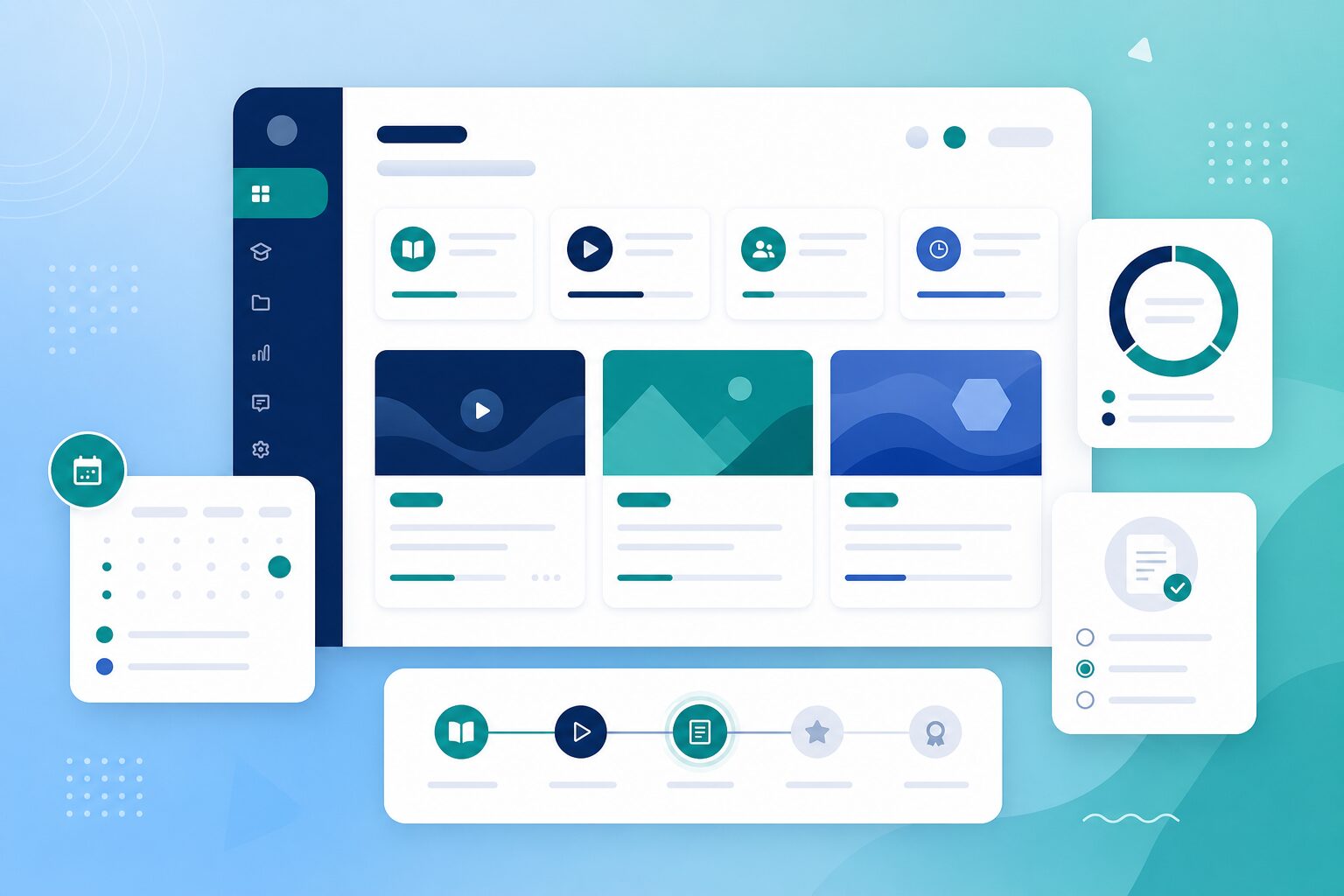
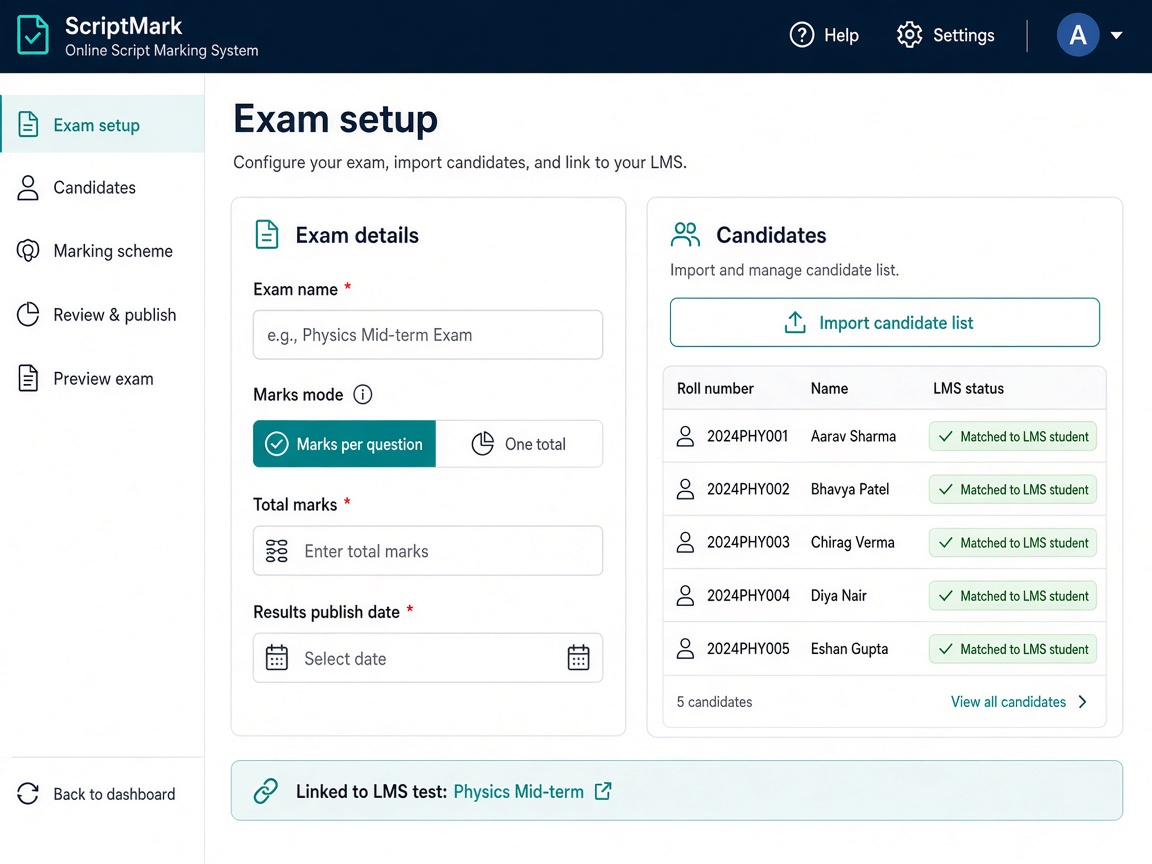
Create the examination
Build papers from question banks and blueprints, with sections, marking schemes and attempt policies.
- Question banks & blueprints
- Sections & marking schemes
- AI-assisted question generation
- Attempt policies
Next: A configured paper ready to schedule.
Stage 2 of 9
Schedule and assign
Assign the examination to cohorts, slots and centres, and publish instructions to learners.
- Cohort & batch assignment
- Slots & timings
- Candidate communication
- Public exam links where configured
Next: Learners and centres know when and where to appear.
Stage 3 of 9
Conduct the examination
Online: learners attempt in a timed, resumable environment. Paper: OMR sheets and answer books are printed, dispatched and used at centres.
- Timed online attempts with resume
- OMR sheet printing & dispatch
- Centre-level dispatch tracking
- Candidate verification where configured
Next: Online responses captured—or physical answer books returned.
Stage 4 of 9
Scan the answer books
Receive bundles, register and sort them, then scan—producing structured digital files.
- Receive → register → sort
- High-volume scanning
- Bundle & batch tracking
Next: Digital answer books, still pending validation.
Stage 5 of 9
Validate and reconcile before upload
Check scan completeness and reconcile physical against digital counts, then export files ready for OSM upload.
- Pre-upload validation
- Physical vs digital reconciliation
- Export ready for OSM upload
Next: Clean files ready to upload into Next OSM.
Stage 6 of 9
Evaluate the responses
Online: objective items are auto-evaluated instantly. Paper: evaluators mark scanned scripts on screen under allocation rules.
- Auto-evaluation of objective items
- On-screen marking
- Evaluator allocation
- AI-assisted marking support
Next: Marks per question, per candidate.
Stage 7 of 9
Review through QC and moderation
Quality checks and moderation catch inconsistencies before marks are finalised, with every action recorded.
- QC & review
- Moderation
- Exception tracking
- Marking reports
Next: Reviewed marks, ready to finalise.
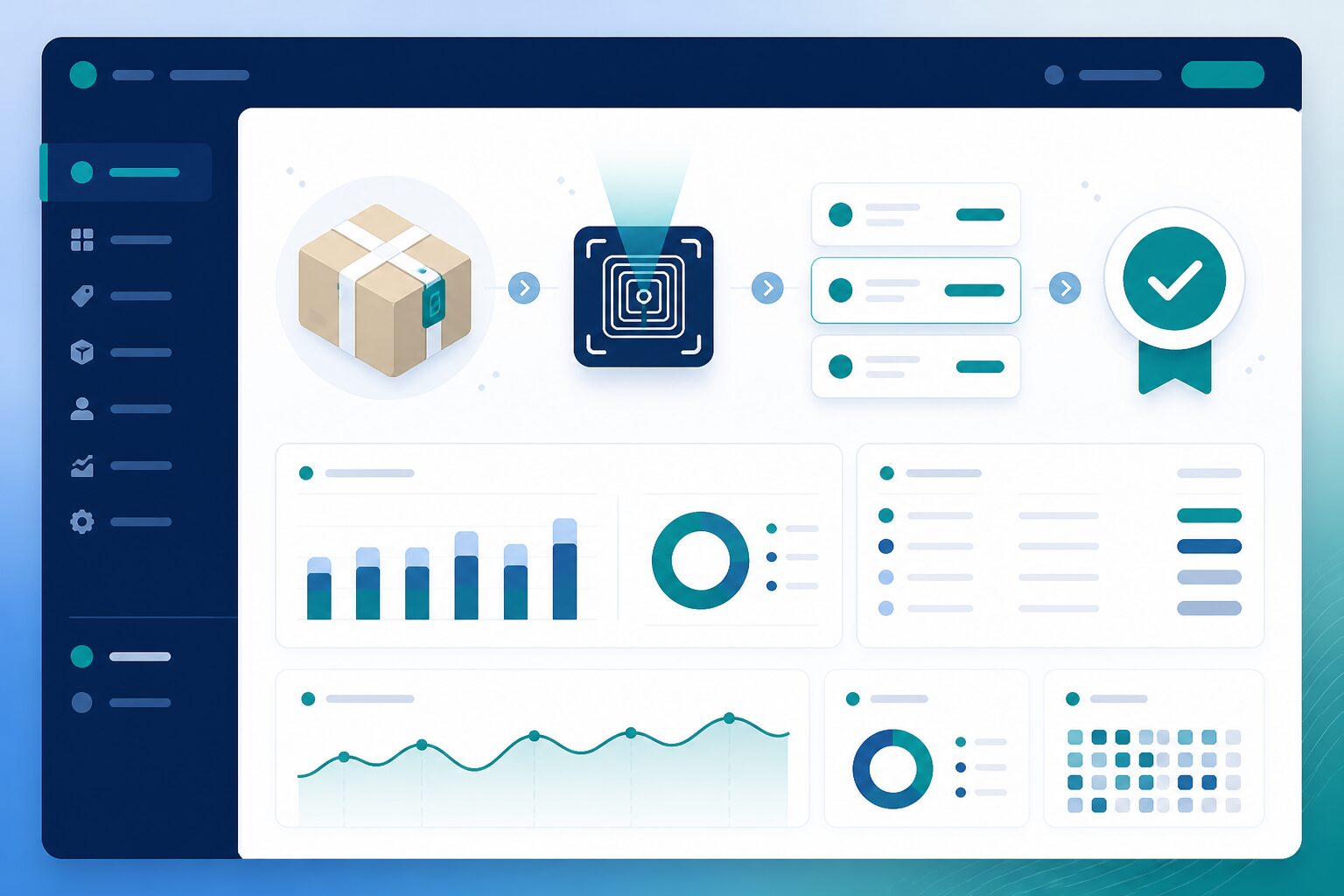
Stage 8 of 9
Finalise the marks
Lock results once evaluation is complete, so what is published is exactly what was approved.
- Result finalisation
- Controlled publish policies
- Result recalculation
Next: Approved marks ready to publish.
Stage 9 of 9
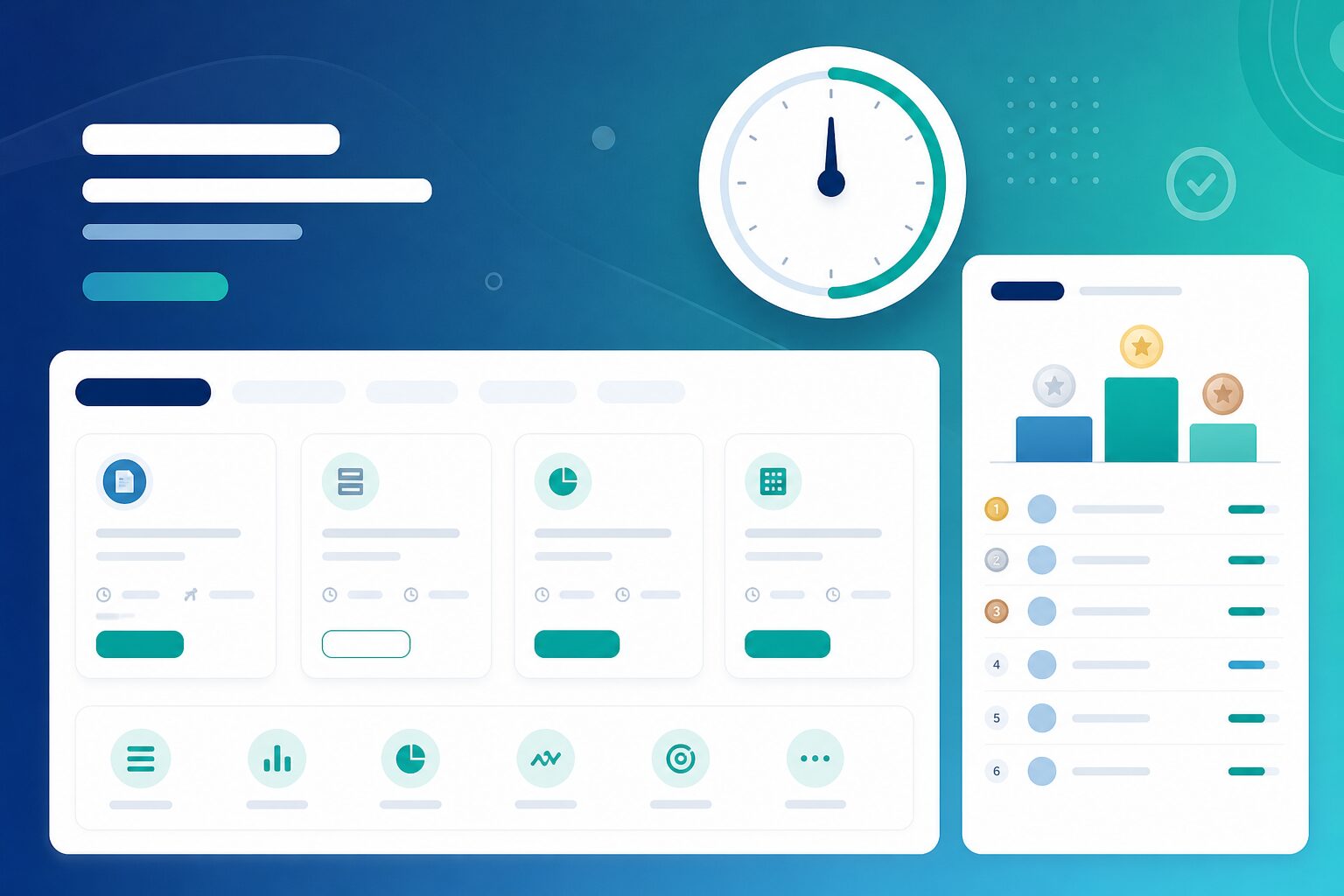
Publish results and insights
Scorecards, ranks and reports reach learners and staff—and result webhooks let other systems react.
- Scorecards & rankings
- Reports & exports
- Result webhooks
- Analytics for next cycle
Next: Insights that improve the next examination.
Automatic grading and human marking—each in its place
Next Learner is explicit about who evaluates what, so institutions can design the right process for each examination.
Online auto-evaluation
Objective questions are scored by the platform the moment a learner submits.
- Instant results & rank lists
- Sectional & topic analytics
- Multi-attempt policies
- Consistent scoring at any scale
- Who evaluates
- The platform
- Typical use
- Mocks, practice & CBT
- Turnaround
- Immediate
How it flows
Human marking in Next OSM
Scanned answer books are marked by evaluators on screen—under allocation rules, QC and moderation.
- Evaluator allocation & workload
- QC and moderation workflows
- Marking reports & payments
- Full record of who did what
- Who evaluates
- Human evaluators
- Typical use
- Subjective, high-stakes papers
- Controls
- QC, moderation & audit
Next Scanning prepares and validates files for upload. QC approval and marking happen inside Next OSM.
How it flows
The products behind every assessment model
Each product does one job well—and hands over to the next without re-entering data.
Next Test Series
Timed mocks, sectional tests, question banks, auto-ranking and scorecards for online assessment at scale.
Explore Test Series arrow_forward
Next LMS
Assignments and institute examinations linked to courses, cohorts and learner progress.
Explore LMS arrow_forward
Next OMR Printing
Template-controlled OMR production, batch printing, verification, reprints and dispatch.
Explore OMR Printing arrow_forward
Next Scanning
Receive, register, sort, scan, validate and reconcile—export ready for OSM upload.
Explore Scanning arrow_forward
Next OSM
On-screen marking with evaluator allocation, QC, moderation, reports and result publishing.
Explore OSM arrow_forward
Next AI Features
AI-assisted question generation, grading support and feedback—under educator control.
Explore AI Features arrow_forwardHow Next Learner works
Connected Ecosystem
How everything works together—from admissions to student success.
Explore arrow_forwardAssessment & Evaluation
How every assessment model moves from creation to results.
Explore arrow_forwardSecurity, Trust & Governance
How institutions maintain control, security and accountability.
Explore arrow_forwardAI Architecture
How AI, intelligence and agents operate within the platform.
Explore arrow_forwardDeployment & Integrations
How Next Learner fits into your technology environment.
Explore arrow_forwardDesign the right assessment model for your institution
Tell us how you assess today—online, on paper or both—and we will map the path from creation to published results.